Applied research · KhNU
Smart system for thermochemical conversion of polymer waste into fuel with energy-autonomous solar power
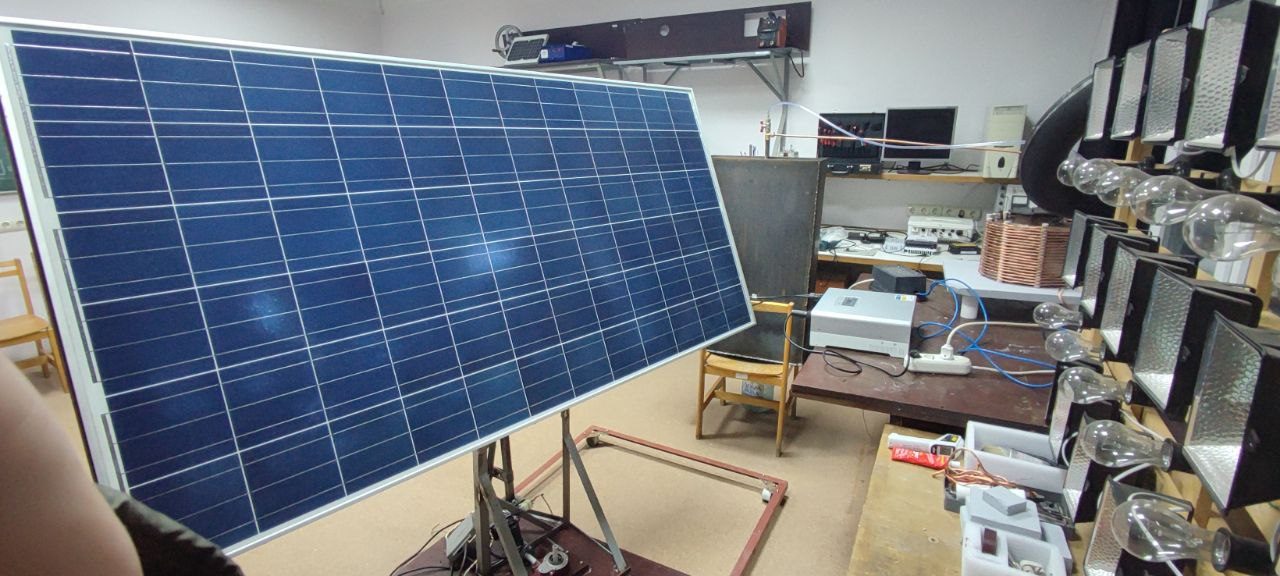
We are building a compact unit that turns plastic and rubber waste into liquid motor fuel. The reactor is heated by induction, solar panels with batteries supply the energy, and a digital control system automatically selects operating modes for each type of feedstock.
|
Research area
Safe, clean energy and energy efficiency
|
Thematic area
Renewable energy sources, circular economy
|
|
Technology readiness
TRL 3 → TRL 5–6
from laboratory proof of concept to validation in a near-real environment
|
Institution
Khmelnytskyi National University
|
|
Project leader
Eduard Manziuk
DSc (Eng.), Professor, Department of Computer Science
|
Principal investigator
Valerii Martyniuk
DSc (Eng.), Professor, Head of the Department of Automation, Computer-Integrated Technologies and Robotics
|
Interdisciplinary project
The project brings together six fields. Chemistry and ecology define what to process and how, energy and mechanical engineering provide the unit, and computer science is responsible for what makes the system “smart”: control, models, optimisation and data.
Leading role
Computer scienceIntelligent process control, mathematical models, mode optimisation, monitoring and research data management. |
Automation and computer-integrated technologiesIndustrial controller, temperature, pressure and gas composition sensors, heating control, emergency protection. |
Renewable energyPhotovoltaic system, batteries, inverter and the balance between generation and consumption. |
Chemical technology and engineeringKinetics of polymer thermal degradation and fuel quality: density, viscosity, fractional composition, sulphur content. |
EcologyImpact of polymers on soil, water and air, environmental criteria for fuel and emission cleaning. |
Machines, apparatus and materials scienceReactor design, thermal calculations, conversion of solid residue into sorbents. |
What computer science does in the project
Digital control systemSoftware for a Siemens SIMATIC S7-1200 industrial controller: PID temperature control, adaptive heating power control, emergency protection. |
Adaptation to feedstockAlgorithms that adjust temperature, reaction time and heating intensity to the type of waste on their own. |
Energy managementAn algorithm that balances solar generation, battery charging and reactor consumption so the unit can run autonomously. |
Real-time monitoringTracking of emissions (CO, NOx, SO₂, particulate matter) and temperature with automatic correction of the operating mode. |
Modelling and predictionKinetic and CFD pyrolysis models for common polymers that predict product yield and properties. |
Mode optimisationDesign of experiments and multi-criteria optimisation with genetic algorithms: balancing fuel yield, fuel quality and energy use. |
FAIR research dataExperiment database, open formats, programmatic access, code in an open repository, data integrity control. |
Software productA computer program for intelligent control of the pyrolysis process with adaptive parameter optimisation. |
Relevance
Plastic accumulates faster than it is recycled
| 415 Mt of plastic produced worldwide in 2023 | 9% of plastic waste from 1950–2015 was recycled |
| 40.7% recycling rate of plastic packaging in the EU in 2022 | 5–7% recycling rate of polymer waste in Ukraine |
Landfilling pollutes the environment for centuries, and mechanical recycling needs careful sorting and does not work for mixed waste. Pyrolysis, the decomposition of polymers by heating without oxygen, makes it possible to obtain liquid fuel similar to diesel from waste. The project addresses gaps that remain in existing solutions:
- Pyrolysis units depend on centralised power grids, and solar-powered induction heating has barely been studied.
- Most units lack adaptive control for the feedstock type and power supply conditions.
- Solid residue and pyrolysis gases are often not utilised.
- Industrial units are stationary and expensive, so small communities cannot use them.
Goal and objectives
To create an intelligent, energy-autonomous system for thermochemical conversion of polymer waste into motor fuel using high-frequency induction heating and photovoltaic power.
- Analyse the environmental impact of synthetic polymers.
- Study the kinetics and thermodynamics of thermal degradation of various polymers.
- Develop ways to use all conversion products following circular economy principles.
- Define environmental quality criteria for liquid fuel from waste.
- Create a fuel quality control system that meets environmental standards.
- Design and build a reactor with induction heating and digital control.
- Develop an energy management system based on photovoltaic modules.
- Create a system for filtering and neutralising gases.
- Run tests and determine optimal operating modes.
- Disseminate the results among researchers, communities, environmental organisations and industry.
How it works
From waste to fuel on solar energy
Shredded waste is heated in a sealed reactor without oxygen. The vapour condenses into liquid fuel, the non-condensable gas is cleaned, and the solid residue becomes raw material for sorbents. A digital control layer runs the whole process.
|
||
|
||
|
||
|
Induction heating warms the reactor walls with eddy currents, so it heats faster and more evenly than gas burners or resistive heaters, and burns no gas.
Prototype
Earlier experimental unit
The project builds on a previously developed prototype: a mini-reactor with induction heating, powered by a solar panel, batteries and the grid, and a cooler in which liquid fuel condenses.
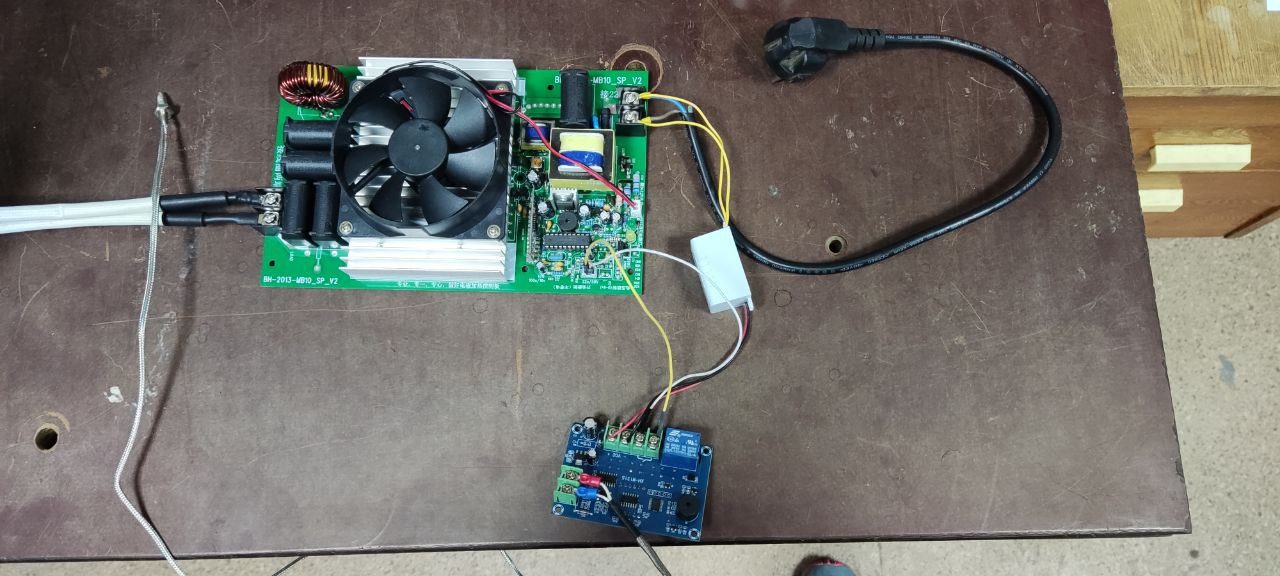
Induction heating control board and thermostat.
|
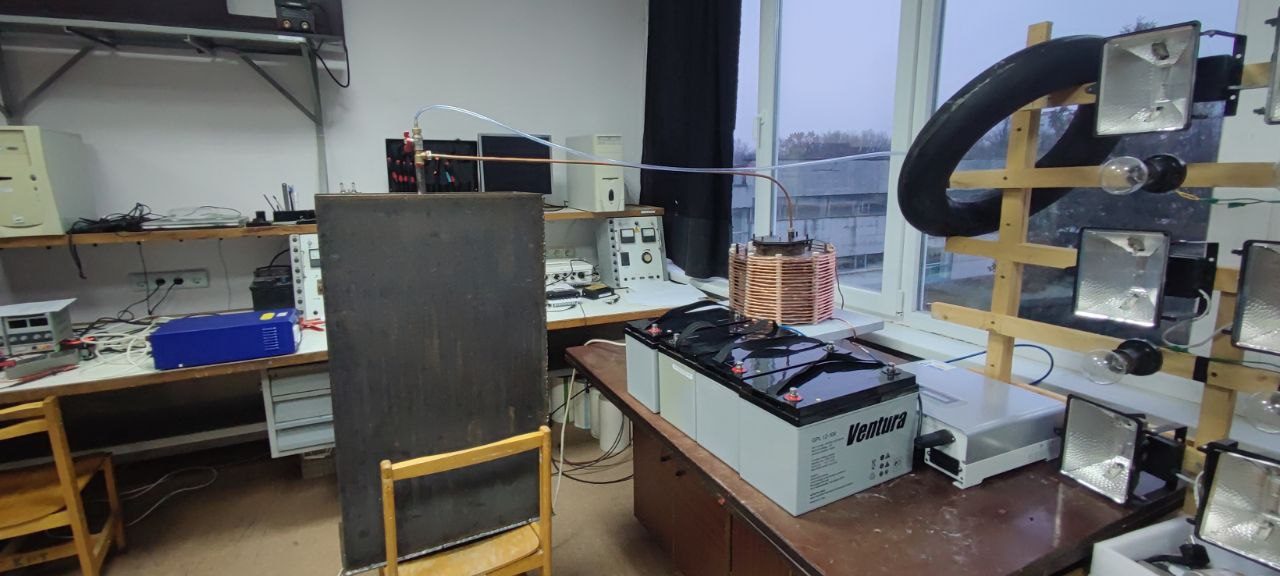
Unit with storage batteries.
|
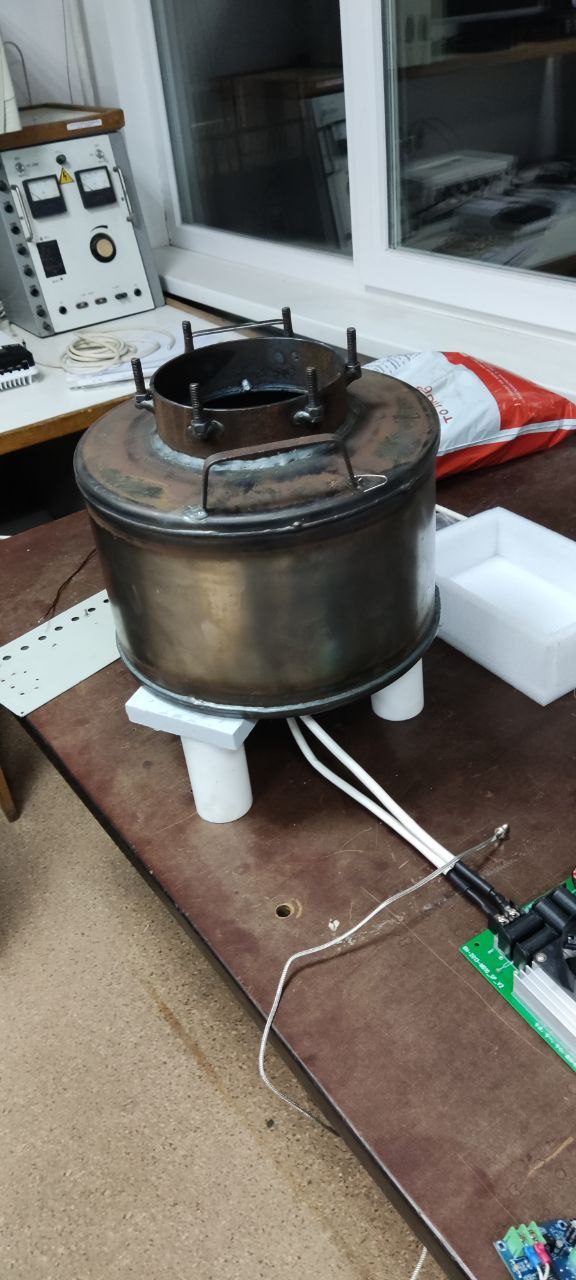
Mini-reactor.
|
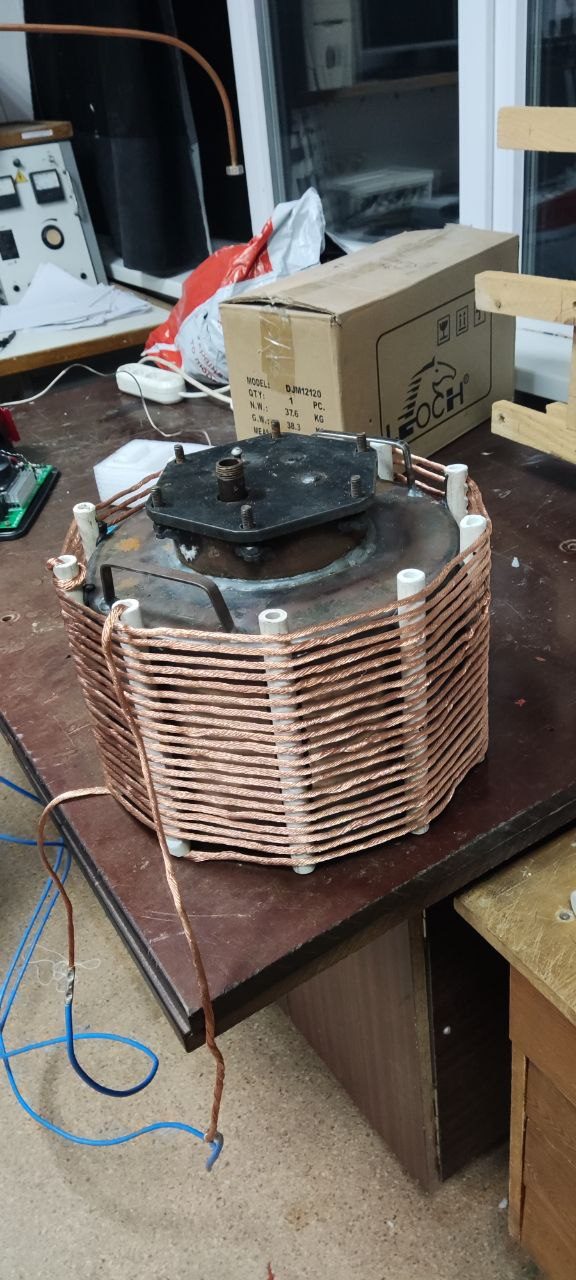
Induction coil around the reactor.
|
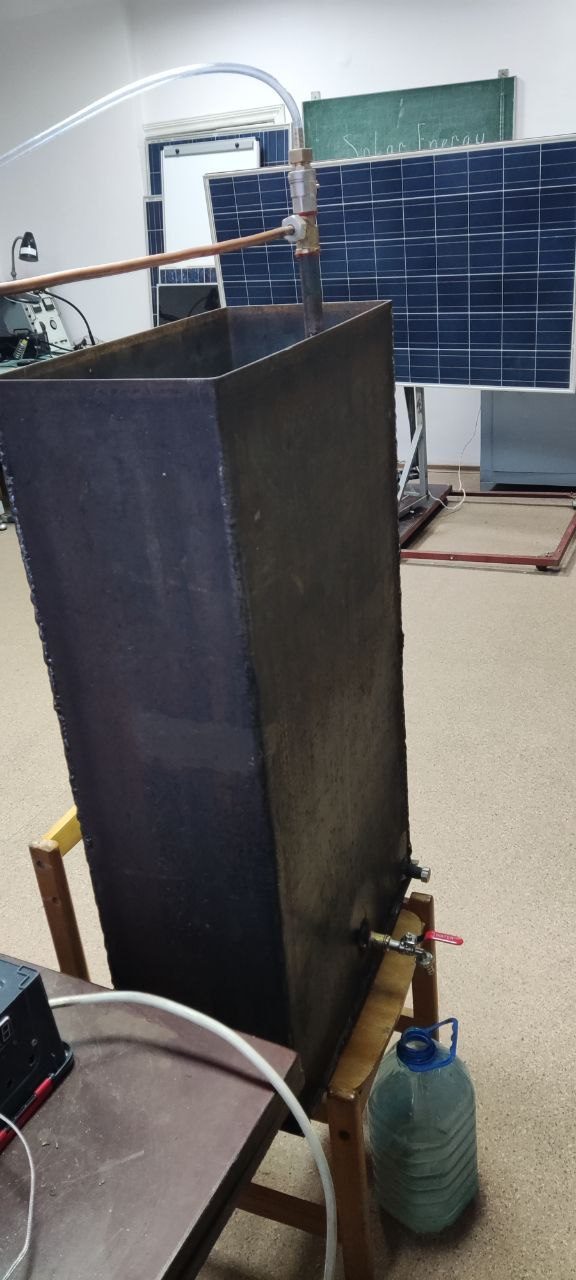
Cooler and condenser.
|
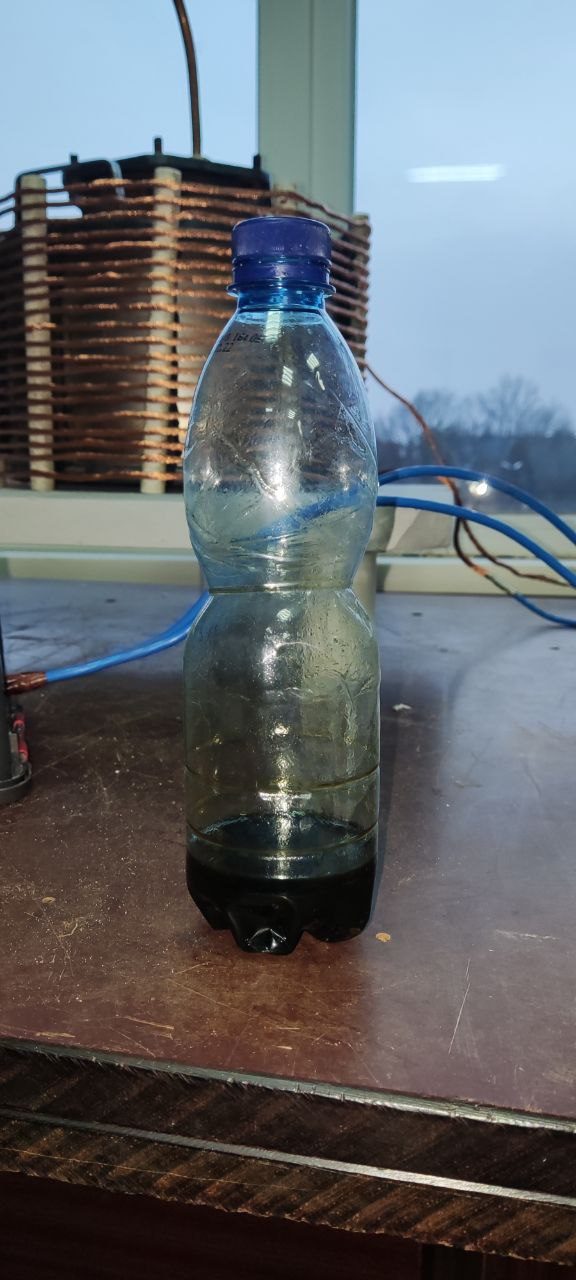
Liquid fuel from rubber waste.
|
Work plan
Four stages of research
- Environmental characteristics of waste and thermochemical degradation processes. Environmental impact of polymers, decomposition kinetics, ways to use all products.
- Environmental monitoring and fuel quality control. Environmental criteria, quality control protocol, process monitoring system.
- Design and manufacture of the smart system. Induction-heated reactor, solar power supply, gas cleaning, testing.
- Dissemination of results. Publications, conferences, seminars for communities and industry, open data.
Expected results
What the project will deliver
Energy-autonomous unitA working model of the conversion system with induction heating and solar generation. |
Digital control systemSoftware with adaptive algorithms for different feedstock types. |
Monitoring platformReal-time control of environmental parameters with automatic mode correction. |
Mathematical modelsValidated pyrolysis models for the most common polymers. |
Polymer databaseClassification of polymer waste by environmental impact. |
Residue technologyConversion of solid pyrolysis residue into sorbents and other useful materials. |
Open science
Results in open access
- Articles in open-access journals and preprints.
- Datasets with persistent DOI identifiers under an open licence.
- Code for control systems and models in an open repository.
- Deposit in the KhNU institutional repository.
- An open online course on polymer waste processing technologies and renewable energy.
Contacts
Get in touch with the project team
Project leader: Eduard Manziuk, manziuk.e@khmnu.edu.ua
Principal investigator: Valerii Martyniuk, martyniukva@khmnu.edu.ua
Khmelnytskyi National University, 11 Instytutska St., Khmelnytskyi, 29016, Ukraine